Valid Reasons for Early Lease Termination by Tenants
Team LeaseTerminationLetter
·Published · Updated
Quick Answer
The legally valid reasons for breaking a lease early without penalty include active-duty military deployment (SCRA), uninhabitable living conditions (constructive eviction), domestic violence protections, landlord harassment or privacy violations, and a mutual agreement or early termination clause in the lease. Buying a house or receiving a job transfer are NOT legally valid reasons in any state and can result in financial penalties.
Breaking a lease is a serious legal decision that can carry significant financial consequences if not handled correctly. When you sign a fixed-term residential lease agreement, you are legally bound to pay rent for the entire duration of that term. However, federal and state laws recognize that life is unpredictable. Under specific circumstances, tenants are granted the legal right to terminate their lease early without facing financial penalties, loss of their security deposit, or damage to their credit score. In this comprehensive guide, we will explore the legally valid reasons for early lease termination by tenants, the required documentation, and the reasons that will not hold up in court.
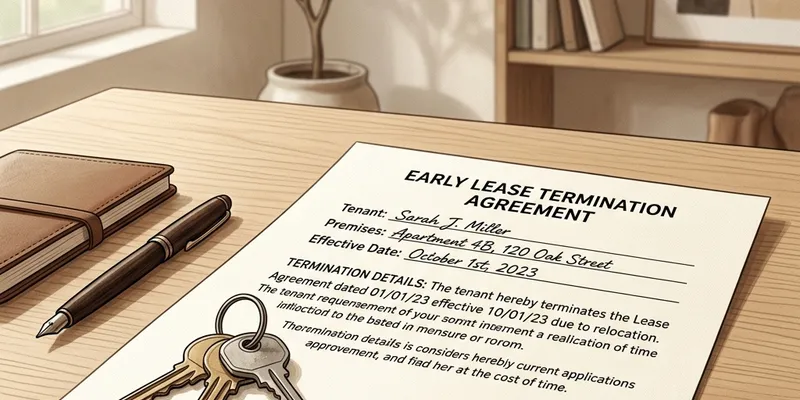
What Are the Risks of Breaking a Lease?
Before diving into the legal justifications, it is vital to understand what is at stake. A lease is a binding contract. If you break it without a legally protected reason, your landlord has the right to take several actions against you. They can withhold your security deposit to cover unpaid rent, charge you an early termination fee, and hold you liable for monthly rent payments until a new tenant is found (though most states require landlords to make a reasonable effort to re-rent the property, known as the "duty to mitigate damages"). Furthermore, they can turn your debt over to a collections agency or sue you in small claims court, which can severely damage your credit score and make it incredibly difficult to rent another property in the future. Therefore, you must be absolutely certain that your reason for leaving qualifies under federal or state law.
1. Active Military Duty (SCRA)
One of the most robust protections for tenants is the Servicemembers Civil Relief Act (SCRA). This federal law allows active-duty military personnel to break a residential lease without penalty if they receive Permanent Change of Station (PCS) orders or deployment orders lasting 90 days or more.
To invoke this protection, you must deliver a written notice of your intent to terminate the lease, accompanied by a copy of your official military orders or a letter from your commanding officer. Once the notice is delivered, the lease will terminate 30 days after the next rent payment is due. For a complete guide on this process, visit our dedicated article on How Military Personnel Can Terminate a Lease Under SCRA.
2. Uninhabitable Living Conditions (Constructive Eviction)
Every state (with the exception of Arkansas) mandates an "implied warranty of habitability." This means landlords are legally obligated to provide a safe, livable environment for their tenants. If a landlord fails to maintain the property to this basic standard, the tenant may be able to terminate the lease through a legal concept called "constructive eviction."
Conditions that may justify constructive eviction include a lack of running water, severe mold infestations, absence of functioning heating during winter, severe structural damage, or dangerous electrical defects. However, you cannot simply pack up and leave. You must first provide the landlord with written notice of the specific defects and allow them a "reasonable" amount of time (as defined by state law) to make the repairs. If they fail to act, you may then have the legal right to terminate the lease. Documenting everything with photographs, videos, and communication logs is critical.
3. Domestic Violence, Stalking, or Sexual Assault
To protect victims of abuse, many states have enacted laws that allow tenants who have experienced domestic violence, stalking, or sexual assault to terminate their lease early without penalty. The specific requirements vary heavily from state to state. Generally, the tenant must provide the landlord with a written notice of termination along with valid proof of their status as a victim, such as a restraining order, an order of protection, or a police report. Some states require a 30-day notice, while others allow for immediate termination to ensure the victim's safety.
4. Landlord Harassment and Privacy Violations
Tenants have a fundamental right to the "quiet enjoyment" of their rented home. If your landlord consistently violates this right, it may serve as grounds for early lease termination. Actions that constitute landlord harassment include entering the property frequently without proper notice (most states require 24 to 48 hours of advance notice for non-emergencies), changing the locks without a court order, turning off essential utilities, or exhibiting threatening or highly intrusive behavior. Similar to constructive eviction, you typically must notify the landlord of the violation in writing and ask them to cease the behavior before attempting to break the lease.
5. Early Termination Clauses in the Lease
Sometimes, the right to terminate early is written directly into the contract. Many modern leases include an early termination or "buy-out" clause. This clause explicitly outlines the conditions under which a tenant can end the lease early. Usually, it requires the tenant to provide a specific amount of notice (e.g., 30 or 60 days) and pay a predefined penalty fee (often equal to one or two months' rent). While this method does cost money, it provides a clean, legally safe break from the contract without the risk of being sued for the remainder of the lease term.
Which Reasons Are NOT Legally Valid?
It is equally important to know what does not qualify as a legally protected reason to break a lease. The following life events, while significant, do not grant you the right to walk away from your contract penalty-free:
- Buying a House: While an exciting milestone, homeownership does not invalidate your rental contract.
- Job Relocation: Unless you have a specific clause in your lease, taking a new job in a different city or state is your personal choice and responsibility.
- Relationship Breakups: Moving in with a partner, or moving out due to a breakup, divorce, or roommate conflict does not absolve you of the lease terms.
- Minor Maintenance Issues: A leaky faucet or a slow drain does not constitute an uninhabitable living environment.
How Do You Properly Notify Your Landlord?
If your situation qualifies as a legally valid reason for early termination, you must execute the process correctly. You are required to provide a formal, written lease termination letter to your landlord. This letter must explicitly state your intent to leave, the specific legal justification for your early termination, your move-out date, and your forwarding address. For your own legal protection, you must send this letter via USPS Certified Mail with a Return Receipt Requested, which provides indisputable proof that the landlord received your notice.
Draft Your Termination Letter
If you have a legally valid reason to break your lease, ensure your paperwork is flawless. Use our free tool to generate a state-specific lease termination letter that protects your rights. No sign-up required.
Generate Your Free Letter Now →Frequently Asked Questions (FAQs)
Can I break my lease because I bought a house?
No, buying a house is not a legally protected reason for early lease termination in any state. If you break your lease to buy a home, you may be held responsible for the remaining rent until the landlord finds a new tenant, unless your lease has a specific buy-out clause.
Does a job transfer qualify for early lease termination?
Generally, a job transfer is not a legally valid reason to break a lease without penalty unless you are active-duty military and covered under the SCRA, or if your specific lease agreement includes a job relocation clause.
How do I prove my apartment is uninhabitable?
To claim constructive eviction, you must gather evidence (photos, videos, health inspector reports), notify your landlord in writing about the severe defects (like lack of heat, severe mold, or no running water), and give them a reasonable amount of time to fix the issue as required by your state's laws before terminating the lease.
What happens if I break my lease for an invalid reason?
If you break your lease for a reason not protected by law, your landlord can keep your security deposit, charge you for early termination fees, hold you liable for rent until a replacement tenant is found, and potentially sue you for breach of contract, which could damage your credit score.
Related Articles
- Early Lease Termination Letter: When and How to Break Your Lease
The practical steps to write and deliver an early termination letter.
- Termination Letter Due to Landlord Breach
How to legally terminate when your landlord violates the lease or warranty of habitability.
- 30-Day vs 60-Day Lease Termination Notice
Understand which notice period your state requires for early termination.