How Military Personnel Can Terminate a Lease Under SCRA
Team LeaseTerminationLetter
·Published
Quick Answer
Under the SCRA, military personnel can break a lease without penalty if they enter active duty after signing the lease, or if they receive Permanent Change of Station (PCS) orders or deployment orders for 90 days or more. To terminate the lease, the servicemember must deliver a written notice along with a copy of their military orders to the landlord. The lease legally ends 30 days after the next rent payment is due.
Service members sacrifice a tremendous amount for their country, and the last thing they should have to worry about when receiving deployment or relocation orders is a restrictive residential lease. Recognizing the unique and unpredictable nature of military service, the federal government enacted the Servicemembers Civil Relief Act (SCRA). The SCRA provides robust, sweeping protections that allow active-duty military personnel and their families to break a residential lease without facing crippling financial penalties or damage to their credit scores. However, invoking this federal right requires strict adherence to specific procedures. In this guide, we will break down exactly who qualifies for SCRA protections, how the 30-day notice rule actually works, and how to draft a legally flawless termination letter.
Who is Covered by the SCRA?
The SCRA is a federal law (codified at 50 U.S.C. § 3955), meaning it supersedes all state laws and local ordinances. It applies uniformly across all 50 states. The protections apply to:
- Active-duty members of the Army, Navy, Air Force, Marine Corps, and Coast Guard.
- Members of the National Guard mobilized under federal orders for more than 30 consecutive days.
- Commissioned officers of the Public Health Service (PHS) and the National Oceanic and Atmospheric Administration (NOAA).
- Dependents of the servicemember (spouses and children) who are listed on the lease agreement.
Qualifying Military Orders
You cannot break your lease simply because you are in the military. You must meet one of the following specific triggering events:
- Entering Active Duty: You signed a lease as a civilian and were subsequently called to active duty.
- Permanent Change of Station (PCS): You receive orders to relocate to a new base or assignment.
- Deployment: You receive orders to deploy with a military unit for a period of 90 days or longer.
If you receive orders for temporary duty (TDY) that last less than 90 days, the SCRA does not give you the right to break your residential lease.
The SCRA Timeline: When Does the Lease End?
One of the biggest misconceptions about the SCRA is that it allows a servicemember to immediately walk away from a property the day they hand over their orders. This is incorrect. The SCRA has a very specific timeline designed to give the landlord at least a brief window to prepare.
By law, termination of a property lease becomes effective 30 days after the first date on which the next rental payment is due, following the delivery of the written notice.
For example: If rent is due on the 1st of every month, and you deliver your notice on August 15th, the "next rental payment is due" on September 1st. Add 30 days to September 1st, and your lease officially terminates on October 1st. You are legally responsible for paying the rent for the entire month of September, even if you deploy on August 20th.
How to Invoke Your SCRA Rights
To properly invoke your rights, you must provide the landlord with two things:
- A formal written lease termination letter stating you are breaking the lease under the protections of the SCRA.
- A copy of your official military orders (or a letter from your commanding officer verifying the orders).
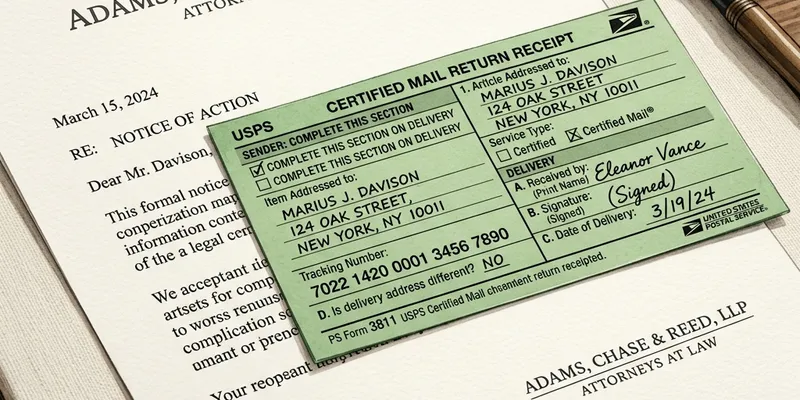
As with any legal notice, it is highly recommended to send this documentation via USPS Certified Mail with Return Receipt. This prevents the landlord from claiming they never received the orders and trying to charge you for subsequent months.
Can Landlords Charge Penalties?
Absolutely not. The SCRA strictly prohibits landlords from charging early termination fees, penalties, or withholding your security deposit as a penalty for breaking the lease. If you paid rent in advance for a period that covers after the legal termination date, the landlord must refund that prorated amount to you within 30 days of the termination date.
Note, however, that you are still liable for any physical damages to the property beyond normal wear and tear, as well as any unpaid rent leading up to the official termination date.
Generate Your SCRA Letter
Ensure your notice fully complies with federal law. Use our free tool to generate a legally robust SCRA lease termination letter instantly.
Create Free Letter →Frequently Asked Questions (FAQs)
Does the SCRA apply to family members and dependents?
Yes. The SCRA allows the servicemember to terminate the lease, which effectively terminates the lease for any dependents who are also on the lease. Some states have additional protections specifically for spouses.
Can my landlord charge me an early termination fee?
No. Federal law prohibits landlords from charging an early termination fee or penalty to servicemembers breaking a lease under the SCRA.
When exactly does the lease end after I give notice?
For a standard residential lease, termination becomes effective 30 days after the first date on which the next rental payment is due following the delivery of the notice.
Can I use SCRA to break a lease if I signed it after I entered active duty?
Yes, you can break a lease signed while on active duty if you subsequently receive Permanent Change of Station (PCS) orders or deployment orders for a period of 90 days or more.